Sharding, Only Possible in Parallel Blockchain  

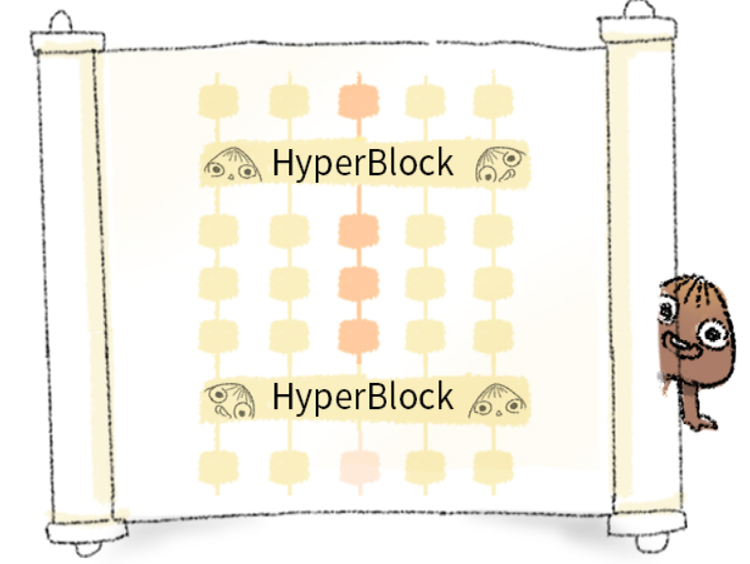
Let’s talk about dynamic sharding today! It may be the best solution for scaling up single sequential chains. Bitcoin, Ethereum, and other mainstream public chains all have actively explored sharding solutions to improve their performance. However, the industry has yet to come up with an effective solution. In Paralism’s parallel chain, dynamic sharding is a natural and automatic process within the parallel chain structure. It triggers automatically and generates a global consensus  during the hyperblock phase of adding new sub-chains after sharding. The whole process is smooth and efficient, saving both time and effort. Continue reading “Sharding, Only Possible in Parallel Blockchain  “
Buddy Consensus-Form a global consensus

Traditional proof-of-work (PoW), proof-of-stake (PoS), and other classical algorithms require a fierce competition to determine who gets to be the final ledger writer. PoW competes on computing power, PoS competes on the amount of money one has, and PBFT has high communication complexity and only applies to consortium chains and private chains.

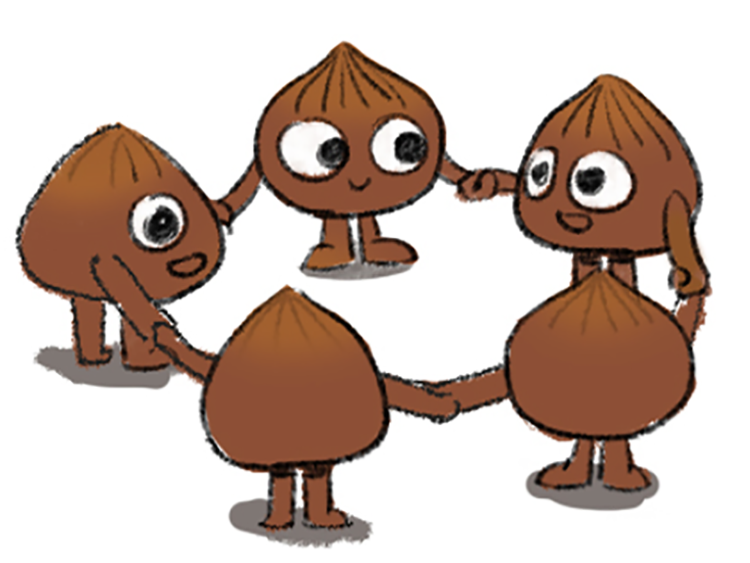
Is there a solution that can ensure efficiency while avoiding this pointless competition? This is where Paralism Buddy algorithm comes in. The Buddy algorithm allows nodes that are related to business to form partnerships, confirm with each other, and generate consensus by finding the greatest common denominator. Ultimately, during the hyperblock stage, an overall consensus is formed, ensuring both efficiency and fairness in the whole process. Continue reading “Buddy Consensus-Form a global consensus”

Paranut tells you: Why is the blockchain going to parallel?

Compared to single sequential chains, parallel chains offer significantly improved performance, dynamic sharding, infinity scalability, cross-chain interoperability, and high compatibility with various business requirements.

However, achieving parallel processing of multiple sub-chains while maintaining a consistent timeframe across all chains is not an easy task. Paralism solves this problem by using a Hyperblock structure. So, what is a Hyperblock? Let’s start from the beginning. Continue reading “Paranut tells you: Why is the blockchain going to parallel?”

Blockchain needs to be developed in parallel

Hello everyone, I am paranut. You can also call me para or nutty. As the spokenut for Paralism, the first ever parallel chain in the galaxy, please allow me to give a like to Paralism for an opening.

So today, let’s first talk about what parallel chains are and why they emerged. Can they solve the long-debated issues of scalability and cross-chain interoperability since the birth of blockchain technology? Continue reading “Blockchain needs to be developed in parallel”