Reading Web3’s Industrial Shift at Token2049

At Token2049 Singapore, discussion moved from concept to implementation — sustainable infrastructure, cross-chain interoperability and AI-data collaboration lead the agenda.

Hyperchain was invited to attend Token2049, held in Singapore. Throughout the conference, the center of gravity of industry discussion clearly shifted from “concept” to “implementation.” Unlike previous years, topics around sustainable infrastructure, cross-chain interoperability, and AI-and-data collaboration were noticeably more prominent, and the share of institutional and industry-side participants also rose notably.

Continue reading “Reading Web3’s Industrial Shift at Token2049”

Cross-Chain Interoperability: From Siloed Islands to a Unified Aggregation Gateway

An aggregation layer + Protocol-Agnostic design let heterogeneous chains interoperate through one gateway — assets definable, transferable and traceable.

As blockchains have developed, one contradiction has become increasingly stark: there are more and more chains, yet value grows more and more fragmented.

Continue reading “Cross-Chain Interoperability: From Siloed Islands to a Unified Aggregation Gateway”

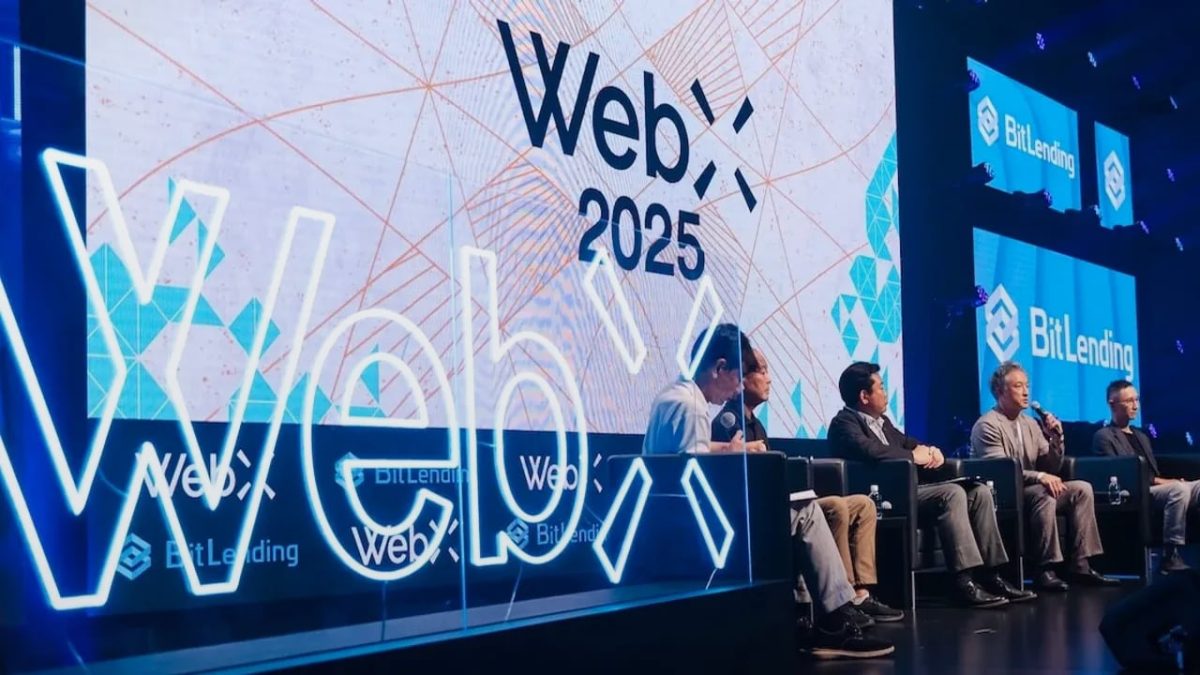
WebX Tokyo: A Practical Sample of the Asian Web3 Ecosystem

At WebX Tokyo 2025, Asia’s Web3 ecosystem moves from following to being its own sample — Japan’s market and developer base as the next growth pole.

Hyperchain, together with partners, participated in the WebX conference held in Tokyo. The most prominent change at this conference was that Asia’s Web3 ecosystem is moving from “following” to “becoming its own sample.” Japanese industry’s focus on compliance, cross-border collaboration, and the digitalization of intellectual property was especially pronounced, and discussion around parallel infrastructure and data sovereignty was quite dense.

Continue reading “WebX Tokyo: A Practical Sample of the Asian Web3 Ecosystem”

Digital Asset Infrastructure: Bridging Real-World Assets (RWA) and Industry Digitalization

Digital asset infrastructure for real-world assets (RWA): Hyperchain’s deterministic parallel chain anchors tokenization of physical assets and industry digitalization.

On August 11, the 2025 Global Digital Economy International Cooperation Forum, themed “Focusing on Global Digital Development, Co-Drawing a Blueprint for International Cooperation,” was held at the Hainan International Convention and Exhibition Center in Haikou. Hosted by the China Industrial Overseas Development Association, the forum discussed the confirmation of rights and the digitalization of physical assets, launched related compliance-collaboration mechanisms and a “special support plan for the digital ecosystem of the real economy,” and worked to deepen the integration of real-world scenarios such as cross-border e-commerce, supply chains, and consumption with digitalization.

Continue reading “Digital Asset Infrastructure: Bridging Real-World Assets (RWA) and Industry Digitalization”

What Is a Parallel Blockchain? How True Parallel Execution Unlocks Scalability

Hyperchain’s truly parallel blockchain: dynamic sharding, pluggable consensus, native cross-chain — linear scalability for a next-generation value infrastructure.

As more and more real business moves on-chain, the industry quickly runs into an uncomfortable truth: a blockchain’s own processing capacity often becomes the bottleneck long before business demand does.

Continue reading “What Is a Parallel Blockchain? How True Parallel Execution Unlocks Scalability”

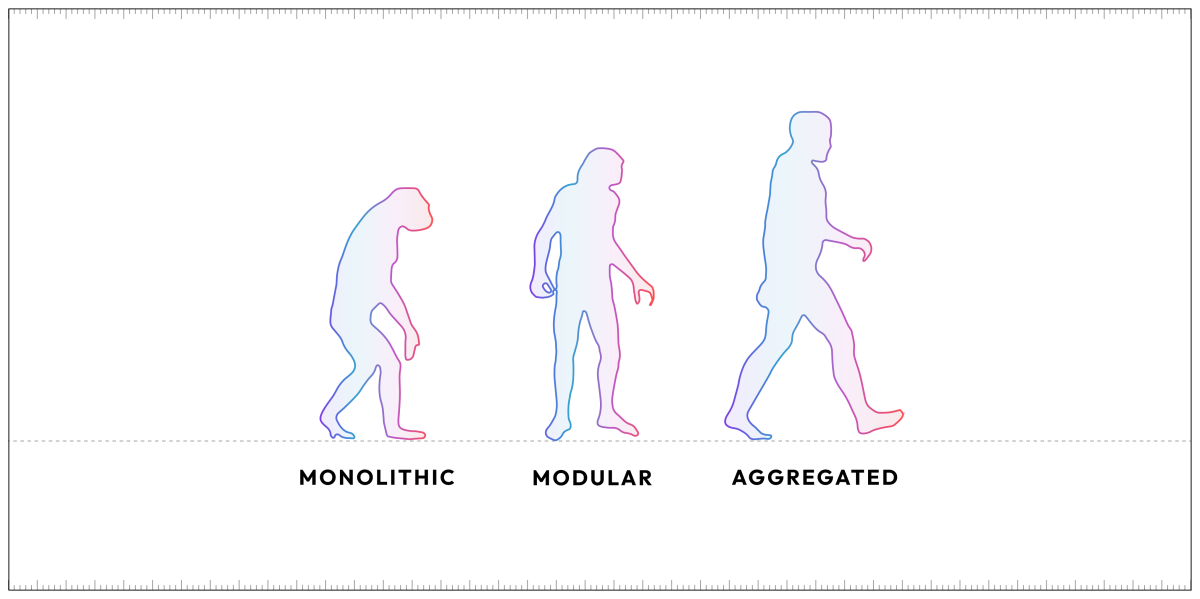
The Aggregation of Web3.0: Protocol-Agnostic and AggLayer

In our previous analysis of popular projects, we discussed Polygon’s AggLayer, which is quite similar to Paralism’s Protocol-Agnostic concept. Both are exploring how to aggregate existing blockchains, users, and liquidity to form a unified entry point into Web3, thereby breaking down the isolated ecosystems barriers.

Continue reading “The Aggregation of Web3.0: Protocol-Agnostic and AggLayer”

Overview of Web3.0 Fundraising in August

In August 2024, Web3.0 projects completed a total of 117 financing rounds, raising approximately $777 million, which is lower than the monthly average over the past year (around $867 million, shown by the blue line in the chart below). The market experienced significant fluctuations in August, and the capital market was also affected. However, the situation is still better compared to the same period last year.

Data resource: https://www.rootdata.com/

Continue reading “Overview of Web3.0 Fundraising in August”

Popular Project Analysis: Polygon

On August 22, Polygon announced that it will upgrade its mainnet on September 4 and migrant its native token Matic to POL. Subsequently, several major exchanges announced their support for this upgrade, delisting Matic and listing POL. As a result, Polygon has once again come into the public eye. Over the past year, BTC rose from over $20,000 to over $70,000 at its peak, while Matic increased from over $0.50 to $1.20 but has recently fallen below $0.50. As an Ethereum Layer 2 solution dedicated to addressing scalability issues, Polygon’s past achievements are undeniable. Even during the bear market of 2022 and 2023, it saw the second-largest increase in developer numbers just after Ethereum.

So, let’s take this opportunity to study Polygon once again. Continue reading “Popular Project Analysis: Polygon”

Paralism Secures Another Fundamental Patent from China National Intellectual Property Administration

Dear Partners and Community Members,

We are thrilled to announce that another fundamental patent of Paralism’s parallel blockchain technology, titled “ Semantic Solidification and Derivation Method Based on Public Predicate Logic,” has been officially granted by the China National Intellectual Property Administration, under patent number CN114372471A.

This patent supports the definition and derivation of various types of assets, enabling the integration of Web 2.0 data and value into the blockchain network. This breakthrough allows the blockchain to express a wider range of asset types. It marks another significant technological advancement for Web 3.0 infrastructure, greatly enriching the number and variety of assets within the Web 3.0 ecosystem, laying a solid value foundation for its development. Continue reading “Paralism Secures Another Fundamental Patent from China National Intellectual Property Administration”

Paralism’s Another Fundamental Patent for Parallel Blockchain Technology Granted by European Patent Office

Dear Partners and Communities,

We are delighted to announce that Paralism’s patent, “Method for accumulating and co-assembling uniform data has recently been granted by the European Patent Office, with the patent number 3503495.

As the key support for Web3 infrastructure, blockchain technology’s scalability and parallelism play a crucial role in the large-scale development of Web3 applications. This patent by Paralism addresses the issue of data synchronization efficiency across chains, inherently providing cross-chain capabilities and bringing L1 scalability and performance comparable to that of L2. Continue reading “Paralism’s Another Fundamental Patent for Parallel Blockchain Technology Granted by European Patent Office”